HEPA Vacuum - Goodway's Guide to Selecting
a Top Quality HEPA Vacuum
HEPA
Vacuum History
The need for absolute filtration arose during World War II and
was developed by the Atomic Energy Commission as part of the Manhattan
Project to produce the first atomic bomb. There was a pressing
need to address the health and safety issues raised by the handling
of radioactive dust. Research and development produced the first
HEPA (High Efficiency Particulate Air) filters for the ventilation
systems used to deliver ultra clean air to clean rooms.
Certified HEPA
In order for a filter to be certified HEPA,
it must be tested and proven to filter particles as small as
0.3 microns to 99.97% efficiency at its designed air flow.
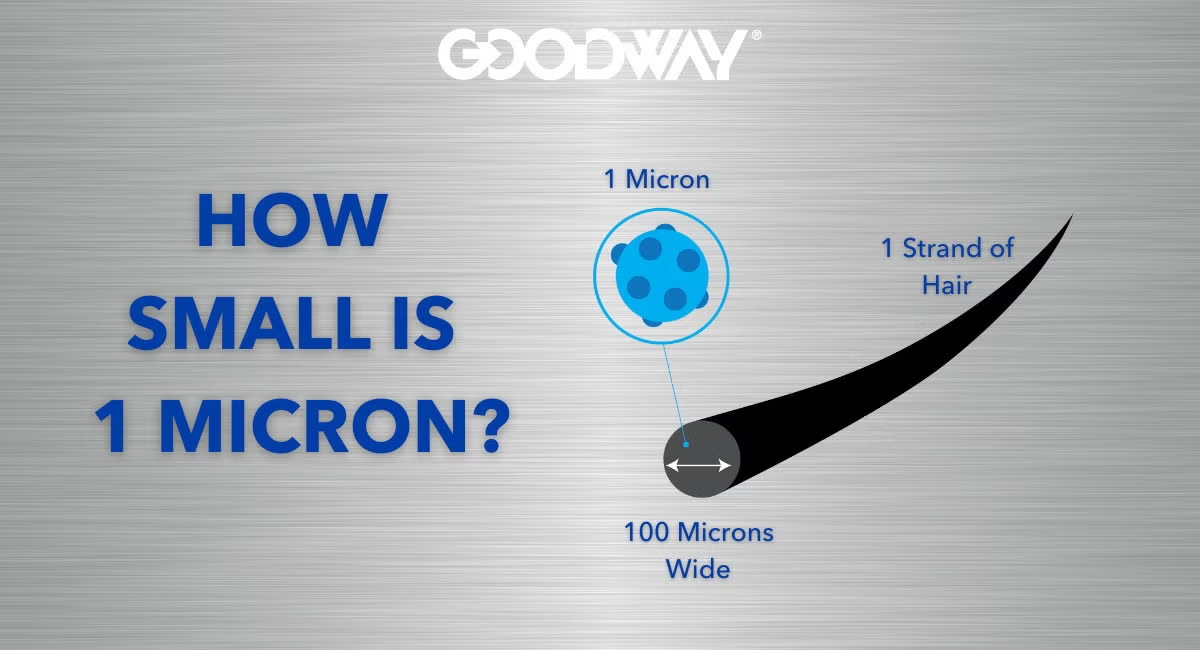
To understand what a HEPA filter does, it helps to understand
what a micron is. A micron is 1 millionth of a meter. A human
hair is approximately 100 microns wide. Particles smaller than
10 microns are not visible to the human eye. A particle of
tobacco smoke averages 0.01 to 1 micron. Most bacteria range
from 0.35 to 10 microns. Almost all viruses, however, are smaller
than 0.03 microns and HEPA filters are not effective at trapping
them.
Historical HEPA Vacuum Applications
HEPA filtration for clean room applications soon found its way
into other industries such as microelectronics, pharmaceuticals,
chemicals and the nuclear power industries. Soon other uses were
realized for HEPA technology – central and portable vacuum
cleaners.
One of the earliest successful uses of portable HEPA
vacuums was their employment in the asbestos abatement industry
from the late 1950’s to the present day. Portable HEPA vacuums
also proved useful for asbestos brake removal at auto repair shops.
Next came lead paint abatement projects in public housing and
government buildings. The city of New York recognized the dangers
of improper lead paint abatement practices and the hazard of
lead paint poisoning to children and passed a law regulating
abatement in public buildings. The following comes from the
City Council of the City of New York:
“The Council finds that lead poisoning from paint containing
lead is a preventable childhood disease and a public health crisis.
The Council further finds that the hazard in dwellings that may
occur from paint containing lead is subject to many factors, such
as the age of a building and its maintenance. The council also
finds and declares that City government must focus on primary
prevention as the essential tool to combat childhood lead poisoning
and to achieve the goal of preventing children from suffering
the adverse health and other effects of exposure to lead-based
paint. The pursuit of primary prevention, which means eliminating
lead hazards before children are exposed, has been recommended
by the United States Centers for Disease Control and Prevention
and promoted by leading experts in the field as a critical course
of action to protect the health of young children. The Council,
therefore, declares that resources must be directed to primary
prevention, including identifying children who are most at risk.”
So begins the New York City Childhood Lead Poisoning Prevention
Act of 2003 which finally puts to rest the 20-plus year debate
over lead paint abatement versus lead paint containment. The new
law stands solidly on the side of abatement and makes owners of
most multi dwelling buildings responsible for identifying dwellings
where children under the age of seven live. In addition, it holds
owners responsible for inspecting dwellings with young children
and public areas to determine if a lead paint hazard exists and
to remove the lead paint in a timely manner. Building owners are
required to check their buildings annually for apartments with
children under seven. It is currently estimated that 35,000 New
York City children have elevated lead levels in their blood. Each
year at least 4000 new lead poisoning victims are identified in
New York City. Building owners that fail to comply with the law
face fines and possible incarceration. The new law also applies
to most day care facilities in the city.
The recommended method for lead paint abatement calls for the
sealing off of the work area and he use of the wet scraping method
of removal. On completion of the scraping, all surfaces must be
HEPA-vacuumed or washed with detergent before repainting.
HEPA Vacuums Today
Today, HEPA vacuums are employed in a wide variety of industries
to address the safety and health of workers and residents in any
environment where the inhalation of microscopic particles can
pose a health risk. One of the most widespread uses of HEPA vacuums
today is in the duct cleaning service industry where the recovery
of mold spores and other dangerous particles is critical. See
for more HEPA
vacuum uses.
The National Air Duct Cleaners Association (NADCA) has been in the
process of developing standards to regulate the proper cleaning
of ventilation systems. In their document entitled “NADCA
General Specifications for the Cleaning of Commercial Heating, Ventilating
and Air Conditioning Systems” NADCA states, “Particulate
Collection: Where the Particulate Collection Equipment is exhausting
inside the building, HEPA filtration with 99.97% collection efficiency
for 0.3-micron size (or greater) particles shall be used.”
Currently, NADCA is working on a draft for a standard requiring
scheduled re certification of HEPA vacuums used for ventilation
system cleaning by contractors. It’s easy to see how NADCA
takes the health risks of exposure to contaminants seriously.
HEPA filter vacuums have proven invaluable for persons suffering
from allergies, asthma and other respiratory illnesses. Conventional
vacuums simply pick up dust, dander, pollen and whatever else
is in or on the surface being cleaned and discharge the finer
particles back into the air stream where they can then be breathed
by the inhabitants. HEPA vacuums recover and trap small particles
so they are permanently removed from the environment.
The reason HEPA filters are certified to capture particles
0.3 microns in size is because it is the particle size that
mechanical filters are least efficient at collecting. Particles
measuring 0.3 micron in size are the most difficult to remove
from the air and can easily get deep into the respiration system
where they can cause or aggravate lung problems.
HEPA filters are so efficient that only 3 out of every 10,000
particles that enter the filter will get through. Interestingly
enough, HEPA filters actually become more efficient with age
as the trapped particles make the air passages in the filter
even smaller and more difficult for particles to navigate.
Industrial
HEPA Vacuums
Industrial HEPA vacuums are a critical element of any comprehensive cleaning and maintenance program for industries ranging anywhere from food production to biotechnology. Industrial HEPA vacuums serve several purposes in these environments, including: improving indoor air quality (IAQ), removing debris, and controlling the build up of harmful contaminants. Through their unique filtration abilities, HEPA vacuums ensure that harmful particles are not released back into the air to be breathed in by employees or to taint research or production results.
Industrial HEPA Vacuums and Sick Building Syndrome
Industrial HEPA vacuums can dramatically reduce the biological and chemical pollutants that contribute to what is known as "sick building syndrome." This causes a building's inhabitants to feel sick when they are in the building. Biological pollution is caused by such contaminants as: toxic black mold, viruses and bacteria, dust mites, pollen, and insect body parts. To avoid sick building syndrome, it is critical that comprehensive cleaning maintenance programs be followed, including the use of an industrial HEPA vacuum cleaner.
Industrial HEPA vacuums play a large part in mold prevention and remediation because they trap 99.7% of all mold and bacteria. Mold has a huge negative impact on the health of humans and on the buildings they work in. In fact, mold can cause symptoms like eye irritation, nasal stuffiness, skin irritation, and even fever or breathing problems, according to the Environmental Protection Agency. Sick building syndrome sufferers may even contract infections, and even toxicosis
Commercial
HEPA Vacuums
Commercial HEPA vacuums dramatically reduce the occurrence of dust and dirt in a building's interior by trapping small particles like mold and dust. Because clean environments have a positive physical and psychological impact, it is recommended that a commercial HEPA vacuum be used in cleaning surfaces likely to be encountered by employees and customers. This will improve the building's sanitation and minimize the risk of airborne particles and their related symptoms.
Commercial HEPA vacuums are also an important element in keeping air ducts free of dust and debris. Because the vacuum reduces the amount of particles in the air, the air ducts become blocked much less often.
Commercial HEPA Vacuums Control Bacteria, Fungus and Parasites
Commercial HEPA Vacuums are often used to clean buildings that are susceptible to contaminants like those which accompany rodent and pest infestation. A build up of fecal matter, and the bacteria, fungus and parasites that accompany it, can cause serious harm to employees and customers. These infestations can also have a negative impact on a building's machinery, materials, and reputation. HEPA vacuums are the only vacuum cleaners recommended as part of remediation of infestation as they minimize the occurrence of these hazardous particles in the air.
Goodway HEPA vacuums have been proving themselves in difficult environments ranging from nuclear power plants, to laboratory clean rooms, to pharmaceutical companies where processing equipment must be completely cleaned between product batches.
Cross contamination is a real issue for many companies involved in the production of consumable goods. HEPA vacuums are a necessity in the production environments where cleanliness is a must. Businesses that don't take necessary precautions to stabilize the environment in which their product is created often face negative consequences including the financial fallout and negative reputation that results from product recalls.
Features
of a High Quality HEPA Vacuum
Not all HEPA vacuums are of equal quality. Here are some guidelines
to follow to help get the best quality vacuum for the price. Much
of this applies to getting good value in a vacuum generally. Starting
from the ground up, look for high quality ball bearing wheels and
casters that are of sufficient size to be easily moved over irregular
floors and up and down stairs. Next, examine the construction of
the collection devices for ease of cleaning and disposal of contaminants.
Look for smooth easily wiped surfaces like stainless steel and aluminum.
Plastic surfaces should be smooth and free of texturing.
Next, examine the power source – the motors. Better quality
electric vacuums utilize bypass motors. Lesser quality vacuums
use flow through motors. Here’s the difference; a bypass
motor is made so the motor chamber is isolated from the impeller
chamber. The impeller is the fan that creates the lift and suction
that the vacuum produces. The motor chamber has its own cooling
fan that uses clean air from outside the vacuum head to keep
the motor and its carbon brushes cool. A flow through motor
uses the airflow generated by the impeller to cool the motor.
In a flow through motor, any particles that escape the filter
media are actually blown into the motor chamber, reducing the
life of the motor.
Finally, check the prefilters used on the vacuum. There should
be multiple layers of prefiltration to remove as much contaminant
as possible before they reach the HEPA filter. Effective prefilters
extend the life of the HEPA filter and help reduce operating
costs. Good quality HEPA vacuums utilize three and even four
prefilters in some cases.
HEPA Vacuum Performance Ratings
When comparing vacuums, two performance ratings should be evaluated
– static lift and air displacement. Many buyers make the
mistake of comparing horsepower or wattage when shopping for a
good vacuum. The speed of the motor, number of motors and the
design of the impeller have more to do with the performance of
a vacuum than horsepower or wattage. Some vacuums are designed
to produce high static lift - the ability of the machine to get
heavier materials like liquids or metals in motion. Static lift
is measured in inches of water or mercury. Others are designed
to displace large amounts of air, measured in cubic feet per minute
(CFM). These machines are best for recovery of light particles
such as bacteria, pharmaceutical dust, lead paint sanding dust,
asbestos fibers and so on. Electric vacuums are usually designed
for either high lift or high flow. Pneumatically powered vacuums,
however, can be made to produce a high level of both performance
characteristics.
The Proof is in the HEPA Filters
Here is the area where, perhaps, the clearest distinctions can
be made between HEPA vacuums. Early in the incorporation of the
use of HEPA filters in portable vacuums, the HEPA filter was simply
attached to the exhaust port of a conventional vacuum. In many
cases, the HEPA filter was necessarily undersized for its intended
purpose. As the vacuum industry matured in its use of HEPA filtration,
some manufacturers selected positioning the HEPA filter on the
inlet side of the power source, while some chose to stay with
the filter positioned at the exhaust side.
What is best? The debate on this is inconclusive. Positioning
the HEPA filter on the exhaust of the power source on an electric
vacuum does provide the ability to filter the carbon dust expelled
by the motor brushes, but also allows contaminated air to come
into contact with the motors. In addition, the issue of filter
leaks is more critical when the filter is positioned on the
exhaust as the filter is always in a positive pressure mode.
When the HEPA filter is installed on the intake side of the
motors, the motors are better protected from contamination and
the issue of filter leaks is lessened due to the filter being
in a negative pressure mode during operation.
It is also important to compare the size of the HEPA filter
used in each machine. It stands to reason that the larger the
filter, the longer it will perform between filter changes.
Make sure the HEPA filter is certified at the air displacement
that the vacuum generates. If the filter is certified at a lower
CFM air displacement than the vacuum generates, it will not
perform at 99.97% efficiency.
Interestingly, HEPA filters actually become more efficient during
their life span because the passages between the glass fiber filter
medium reduce in size as the filter captures particles.
True HEPA vs. HEPA-Type Filters – Very Important
“True” HEPA filters must be individually tested and
certified to meet the 99.97% efficiency at 0.3 micron performance
level. Each filter is subjected to a DOP test in accordance with
Military Standard MIL-STD-282. DOP (dioctyl phthalate) is an oil
that is used to create a smoke with a very narrow particle size
distribution. The particle size selected is 0.3 microns in diameter.
Following the test, each filter that has passed is assigned a
serial number and the test results are recorded on the filter
itself. If you are looking at a vacuum without this information
on the filter, it is not a true HEPA vacuum.
HEPA-type filters are not subjected to the same rigorous testing
as true HEPA filters and range in efficiency from 85% to 95%.
Obviously, these units are less expensive than true HEPA units,
but their filtering capability is not known exactly. Spending
a few dollars more is easily justifiable when health and safety
concerns are factored in.
Another Important HEPA Vacuum Feature
Lower tier vacuums do not provide for a means to determine when
it is time to replace the HEPA filter, causing the user to rely
on guesswork. Unfortunately, this too often leads to too frequent
or too infrequent filter replacement. Too frequent replacement is
just a waste of money while too infrequent replacement results in
a period of time where the vacuum is used at less than ideal efficiency.
Look for machines that incorporate a device that tells the operator
when to change the filter. Some models use a manometer to monitor
the HEPA filter’s performance while others use pressure
differential devices that measure the pressure drop across the
filter and give the operator a signal, such as a light, when it
is time to replace the filter. These features may add a little
to the initial cost of the machine but usually result in lower
long-term cost of ownership.
HEPA Vacuum Conclusion
As you can see, purchasing a HEPA vacuum cleaner is not a decision
to be taken lightly. Many factors must be weighed and features
compared, but armed with the right knowledge, it is a decision
that can be made with confidence.
More About Goodway's Certified HEPA Vacuums
Goodway Technologies Corporation
Goodway Technologies Corporation was founded
in 1966 by Per K. Reichborn. Since its earliest days, the company
has built a reputation for manufacturing the highest quality cleaning
systems in the world. "This commitment" says Reichborn,
"not only extends to our manufacturing, but to everything
we do, every day, for every product and service. Achieving this
high quality of performance is the shared responsibility of each
employee in every department." Today, Goodway products span
the globe. From Afghanistan to Zimbabwe, Goodway equipment is
used in over 125 countries and on every continent, including Antarctica.
To view samples of Goodway's hepa vacuum
or to receive more information about a Goodway hepa vacuum or
to purchase a Goodway hepa vacuum please visit Goodway.com
or Contact us at
1 800 333-7467.